Pressure to sign today
Offers that expire in hours, or a buyer who discourages you from calling a lawyer.
Instead: Take the time your lawyer needs. A real offer survives a few days.
We buy houses too. This guide is published by a cash home buyer. Here is how to compare us and anyone else fairly. Who runs this site
A guide for Canadian homeowners
Every company that buys houses for cash says it is fair, fast and honest. Here is how to check, using public records, a few direct questions and your own lawyer.
We buy houses too. This guide is written by a cash home buyer. We do not name or rate any other company. Instead we give you checks that work on any buyer, including us. Read our full disclosure.
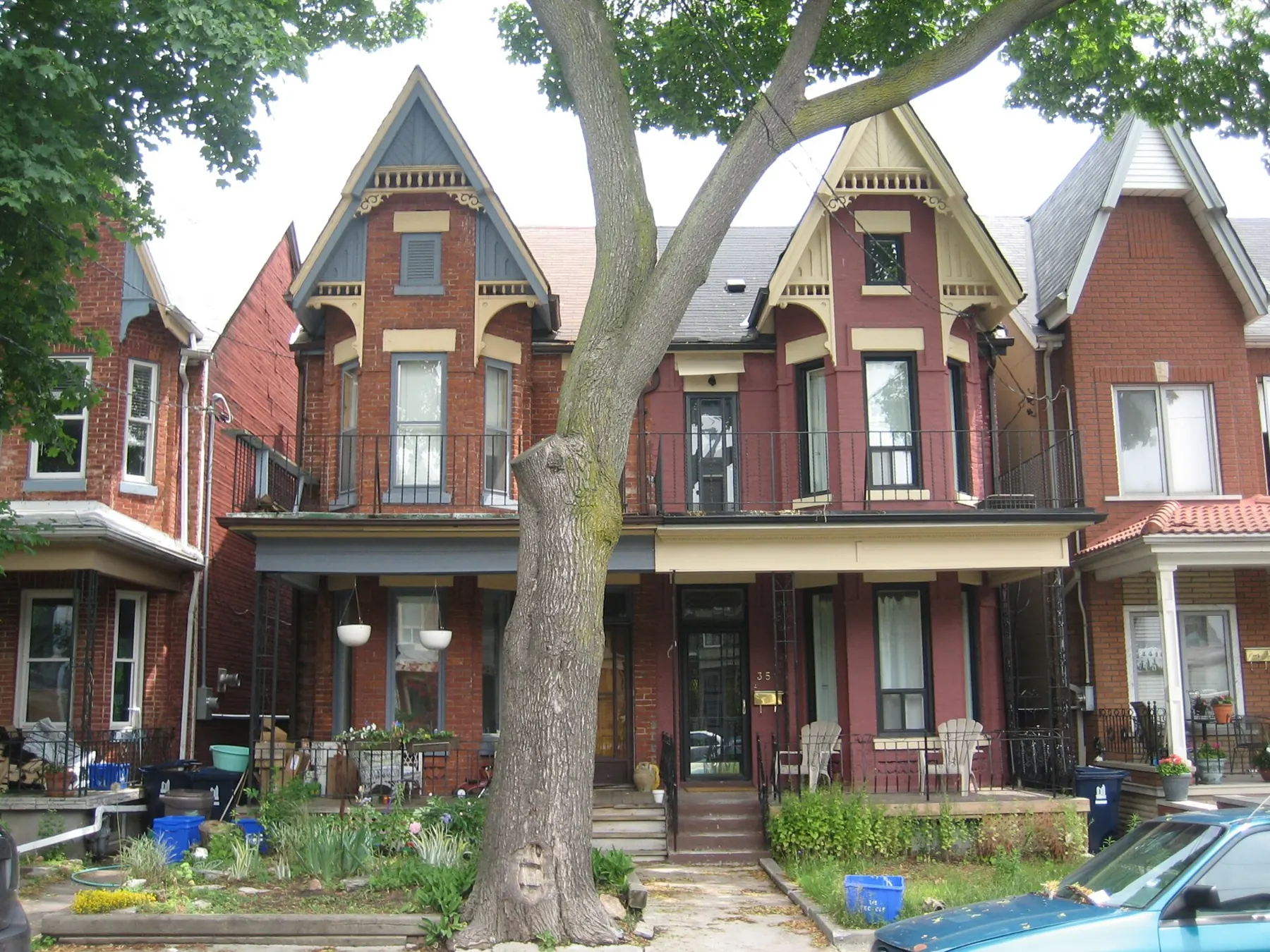
Bay-and-gable houses in Little Italy, Toronto. Photo: Bay-and-gable by SimonP, CC BY-SA 3.0 via Wikimedia Commons
Start here
A good buyer answers these without hesitation and puts the important ones in writing. Tick them off as you go; the list works for any company, including ours.
Why each question mattersAsk every buyer
0 of 10 answered
Red flags
None of these proves a buyer is acting in bad faith. Each one is a reason to ask more questions and to have a lawyer look closely.
Offers that expire in hours, or a buyer who discourages you from calling a lawyer.
Instead: Take the time your lawyer needs. A real offer survives a few days.
A brand name, a first name and a phone number, but no registered company on the agreement.
Instead: Ask for the legal name and look it up in the registry.
A high number to win you over, then repeated cuts after inspection or near closing.
Instead: Ask what could change the price and get the answer in writing.
Fair offers
Most cash buyers start from what the house could sell for after repairs and work backwards. A fair buyer shows you each step.
You can check the first two lines yourself. A comparative market analysis from a brokerage, or recent sales you look up, tells you the value; a contractor's quote tells you the repairs. If the numbers a buyer gives you are far from those, ask why.
Check a company
Public records and independent sources tell you far more than a company's own website, including ours.
Federally incorporated companies are listed with Corporations Canada; provincial ones are reachable through Canada's Business Registries. Confirm the name, status and registered office.
Look for a long history, recent dates and specific details, not just praise on the company's own pages.
If anyone involved says they are a real estate agent or broker, check the provincial regulator's public register.
A real estate lawyer, or a notary in Quebec, reads the conditions, deposit, assignment clause and closing terms before you sign.
Cash offer vs listing
We would be poor guides if we did not say it: for many houses, listing nets more. A cash offer trades price for speed, certainty and skipping repairs.
| Cash buyer, as-is | Listing with a brokerage | |
|---|---|---|
| Price | Below full market value | Market value, if the house shows well |
| Repairs and staging | None | Often worth doing |
| Commission | None | Set in the listing agreement |
| Showings | One walkthrough | Many, over weeks |
| Closing date | Usually your choice | Negotiated with the buyer |
| Best for | Major repairs, estates, tenants, firm deadlines | Homes in good shape, sellers with time |
Our own practices
Since we buy houses too, here is how we work, so you can check us against this guide. No ratings, no testimonials, no badges: just commitments you can test.
Compare us
If you would like a cash offer to compare against others, or against listing, send us the address. We will tell you how we got our number, who would sign the agreement and whether it could be assigned.
If listing looks better for your house, we will tell you that too.